Year-Round Indoor Ice Rink with Full Amenities
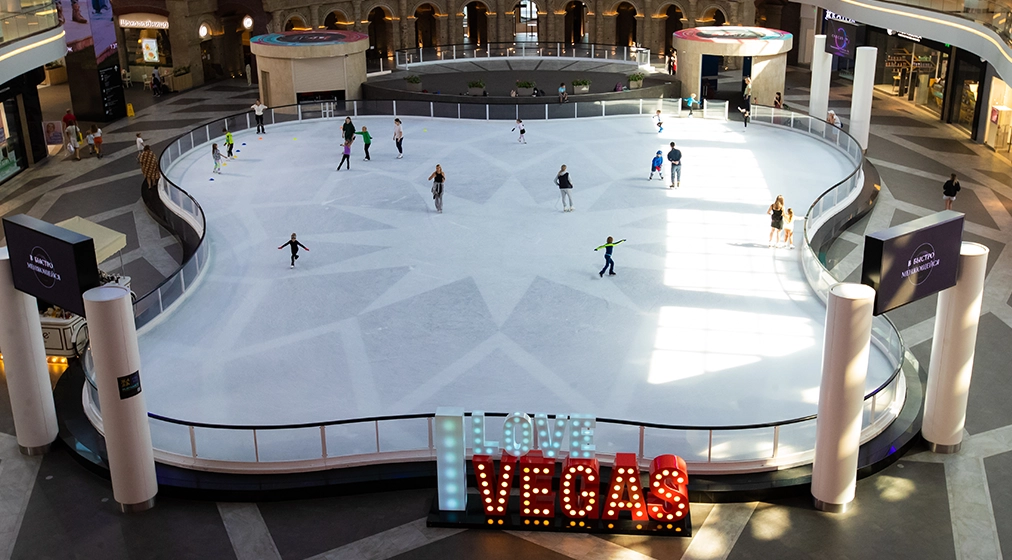
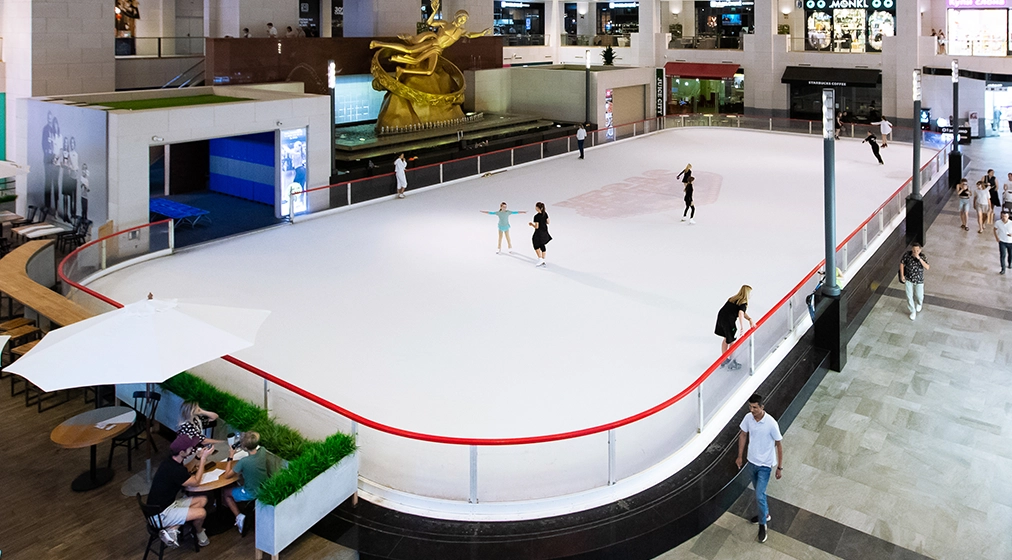
This type of arena is primarily used for public skating or as part of exhibition programs.
Ice Rinks in Shopping Malls: A Business Advantage
Ice rinks in shopping malls generate additional foot traffic, benefiting both mall owners and tenants.
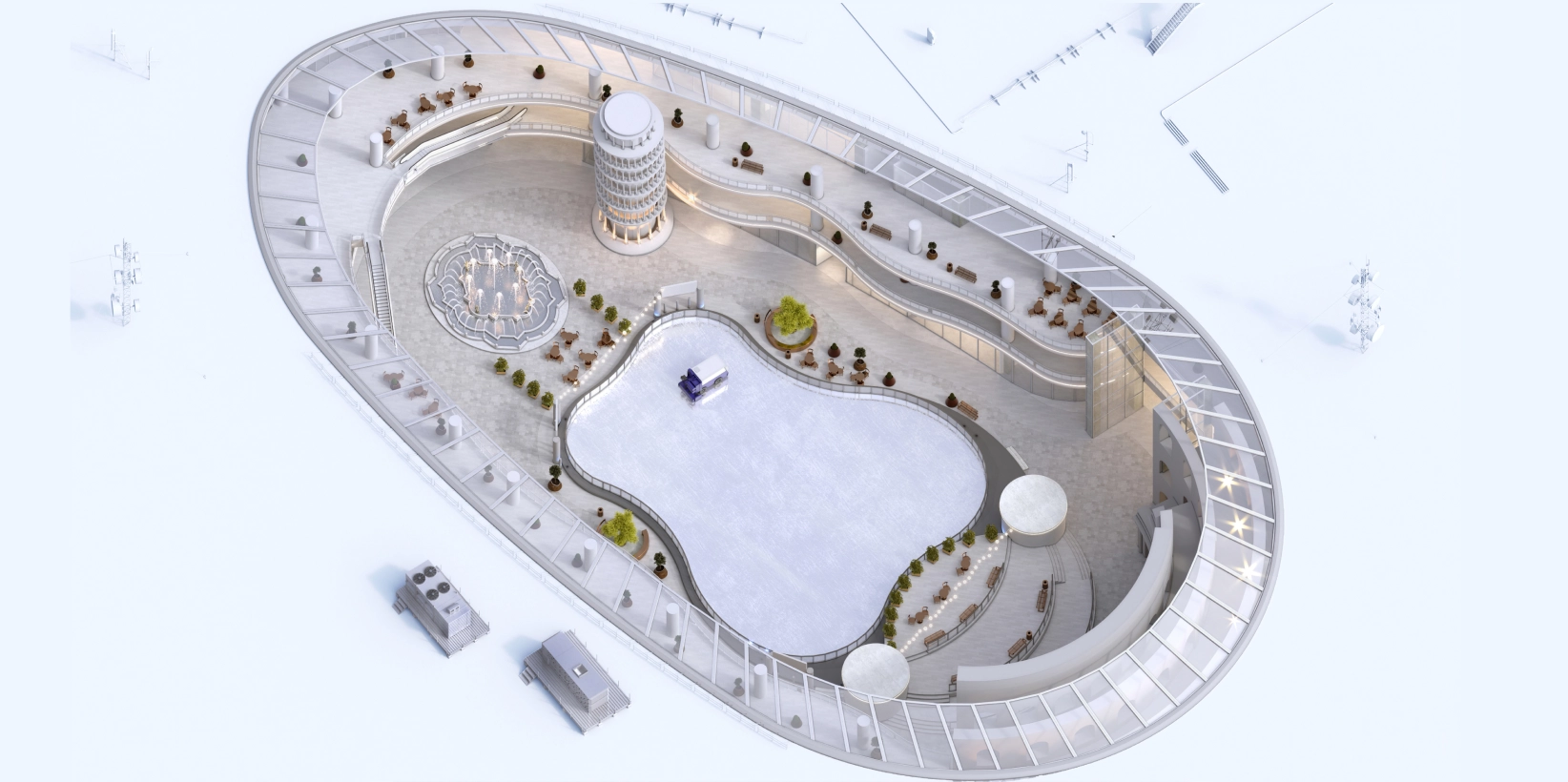
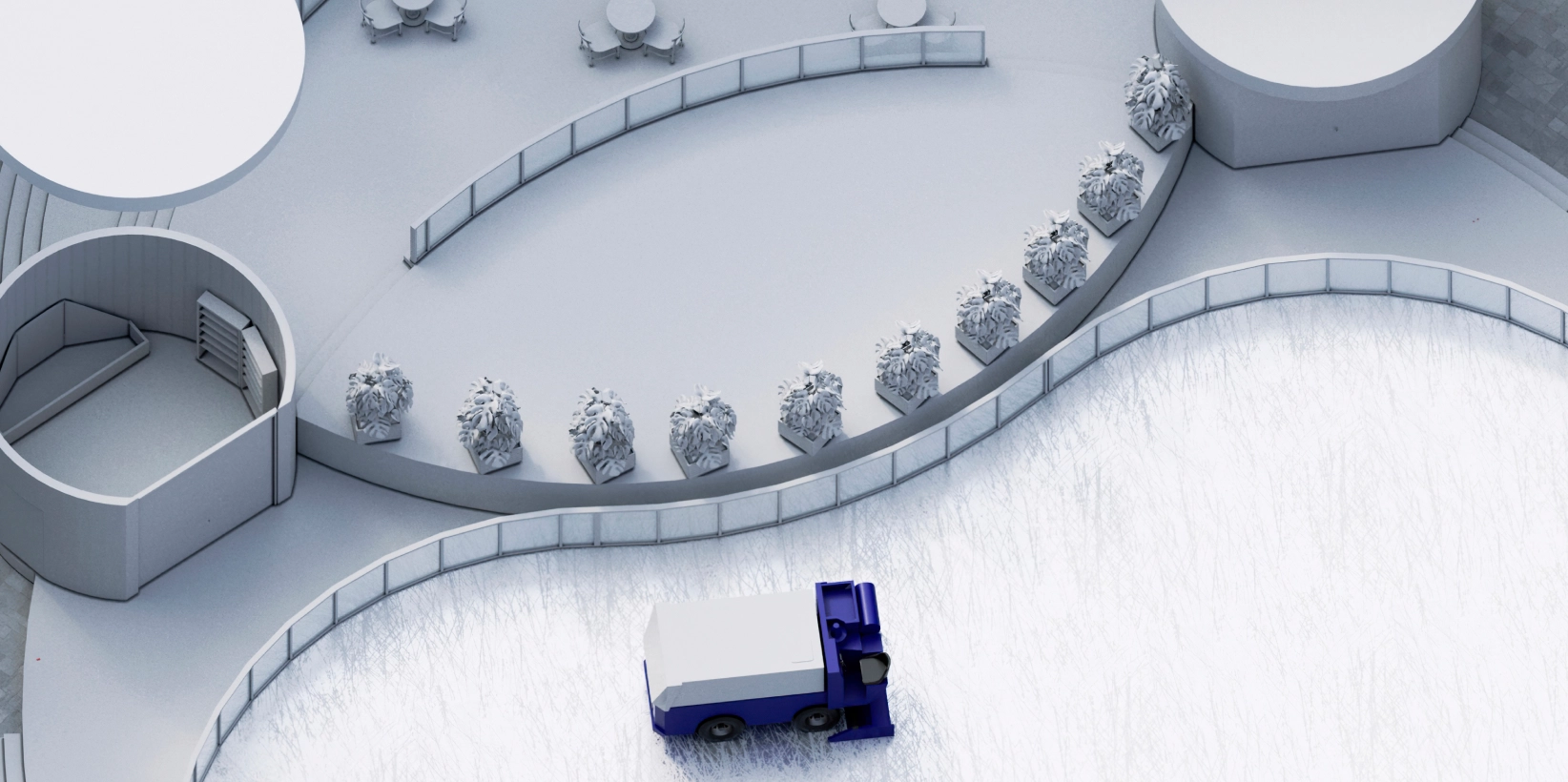
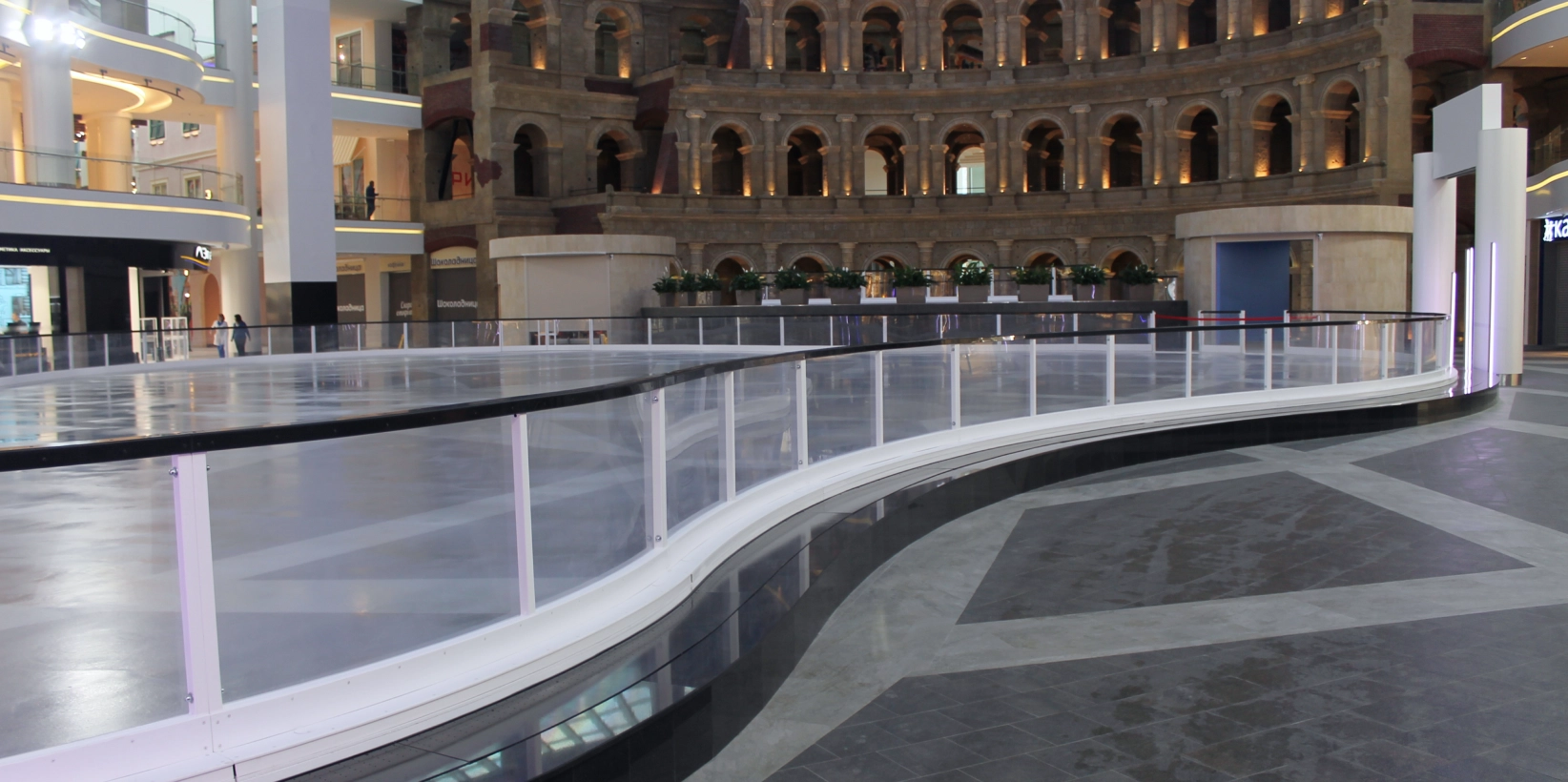
These rinks use artificial ice, and the ice surface can be designed with a specific geometry to better integrate with the mall’s existing architecture.
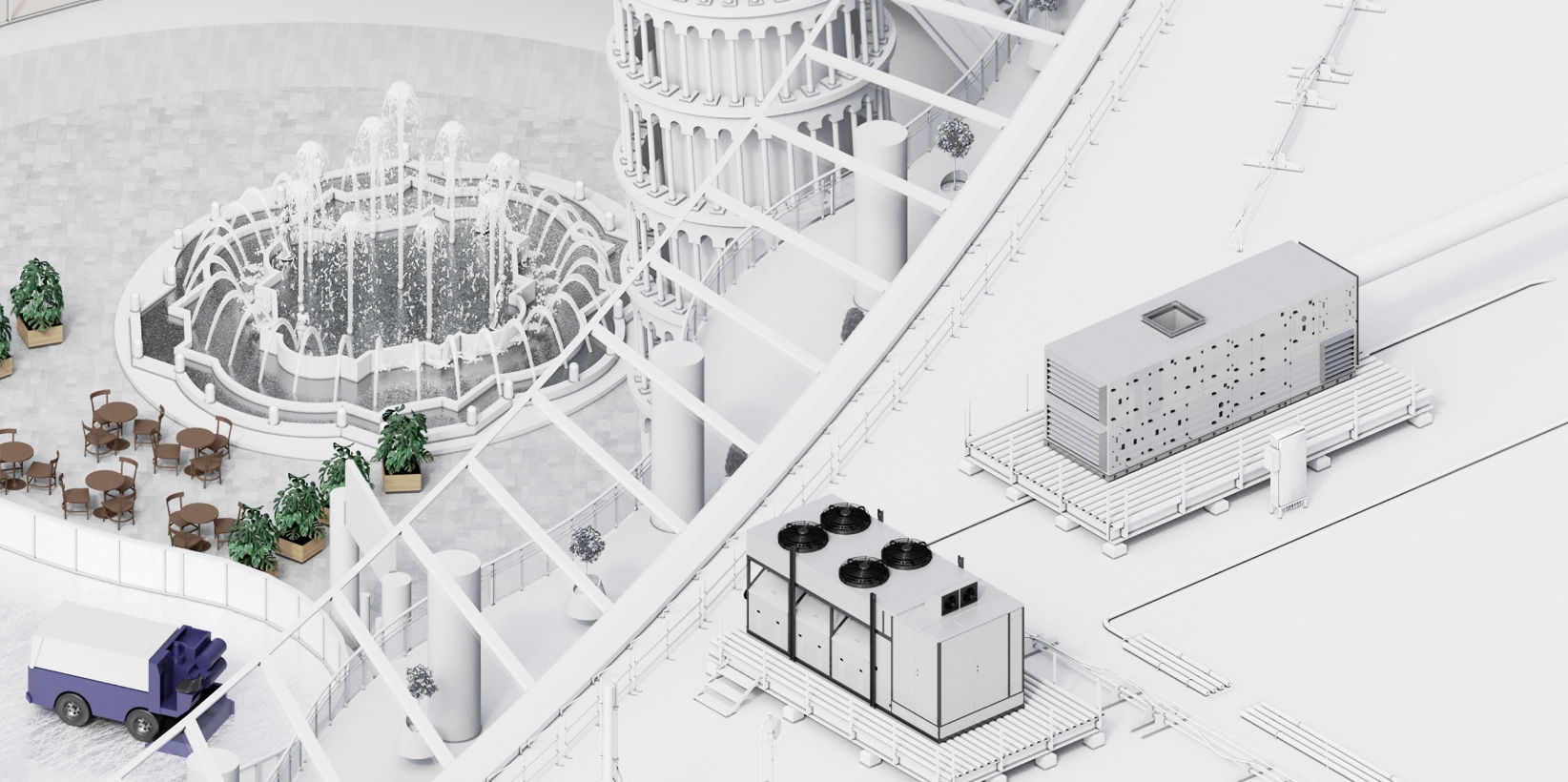
Installing an ice rink with real ice requires complex engineering solutions, which impact both construction costs and the mall’s operational expenses. Key factors include:
The rink location is typically:
In the central part of the mall, where main galleries intersect.
Near one of the main entrances.
Adjacent to the food court or restaurant area.
Additional considerations:
Air temperature for visitors in the rink area is maintained at an average of 20°C, similar to the rest of the shopping mall.
Changing rooms and storage areas for equipment are located within the shared spaces of the mall.
The rink operates according to the mall’s official schedule.
When designing this type of facility, it is crucial to consider temperature and humidity parameters, which differ from standard conditions in shopping malls.
The indoor temperature of an enclosed ice rink should not exceed +23°C, while the area near the ice surface should be maintained at +16°C.
In winter, lower indoor temperatures are better for ice quality and durability.
Unlike specialized ice arenas, shopping mall rinks are often connected to adjacent spaces, sharing a common air volume. Therefore, the ventilation system and climate control must account for external influences from surrounding areas.
Specialized air distribution systems must be installed in key zones to ensure optimal comfort for visitors.
Ventilation equipment with dehumidification maintains the required temperature and humidity levels and is installed on the shopping mall’s roof or outside the building.
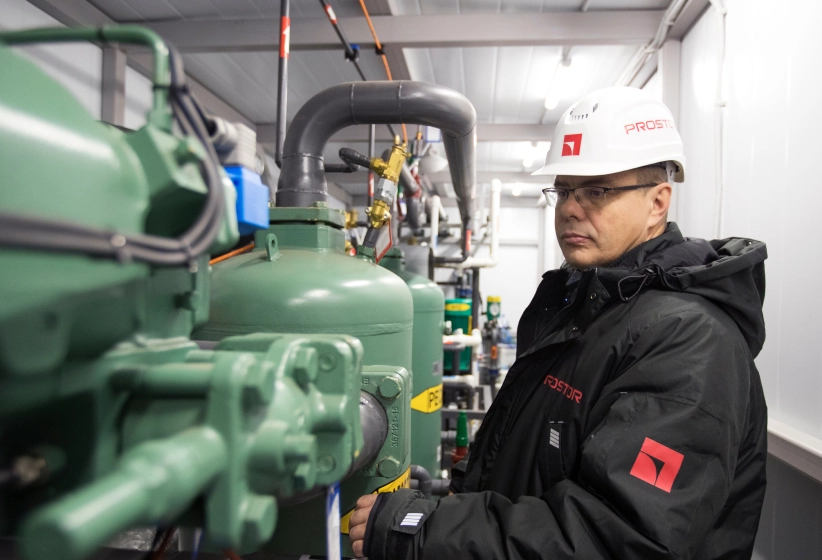
The refrigeration system is installed in designated outdoor zones, with optional upgrades available.
An external air condenser can be installed, including a low-noise version for minimal disruption.
The water treatment system ensures high-quality ice.
A mandatory water quality inspection is conducted on-site, analyzing impurities and chemical composition.
Boards must create a clear boundary between the ice rink and visitors to ensure skater safety.
The design allows for additional custom aesthetic solutions.
Ice resurfacing machines and their designated storage areas are strictly defined in the technical specifications.
Entry and exit points for resurfacing equipment are planned for maximum accessibility relative to the ice rink.
We take full responsibility for every project we build.
After construction and commissioning, we assist in establishing the proper operational regime and help resolve any potential technical issues.